

Greg Mitchell has authored more than a dozen books (see most of them here) and directed four recent PBS films. Subscribing to this newsletter is still FREE—so if you want to help fund, maybe purchase one of my books, thanks!
Stephen celebrates last night:
The tunes, they are a-charging: from NY Times:
“New York is a-changin’,” Zohran Mamdani quipped in a social media post on Tuesday night, shortly before voters elected the democratic socialist the next mayor of New York City. But Mr. Mamdani apparently didn’t have permission to use the song he wanted — Bob Dylan’s 1964 classic “The Times They Are a-Changin’” — to underscore his point.
The campaign’s use of the song was apparently denied permission by the Universal Music Publishing Group, or UMPG, the company that purchased Mr. Dylan’s songwriting rights from him in 2020 for more than $300 million. In a statement, a spokesman for UMPG said: “As a longstanding policy, we do not license Bob Dylan compositions for projects involving political figures.”

Although the result of the NYC mayoral race drew more attention, it was heartening to see Mikie Sherill and Abigail Spanberger win surprisingly wide margins in capturing the contests for governor in New Jersey and Virginia. We’ve come a long way, baby, in electing women to high office, although the male/female ratio remains our of kilter. But not so long that ratio was almost non-existent.
To cite one fact: As of 1950, only three women had ever served in the U.S. Senate boys’ club, mainly as appointees filling out their husband’s term.
That year, however, near the height of anti-Communist hysteria in America, as Joe McCarthy launched his crusade, a race in California might have opened doors for women a lot earlier if a certain well-known and well-qualified woman had won—on election day, 75 years ago tomorrow.
Helen Gahagan Douglas, an intelligent, attractive former actress and liberal activist -- and three-term Democratic congresswoman from Los Angeles -- ran for an open Senate seat. Her opponent: a young Republican congressman named Richard Milhous Nixon. It was the campaign that would earn him a nickname that stuck: Tricky Dick. His team would call her the Pink Lady. I wrote about the campaign a few years ago in a Random House book, Tricky Dick and the Pink Lady. It probed the contest in the context of the Red Scare but also, as the subtitle had it, “Sexual Politics.” Indeed, Douglas would become a feminist icon in the 1970s.
Just to give you an idea of what Douglas--then one of only nine women in the House-- faced: She was described as “pink right down to her underwear” by Nixon.
Nevertheless, she told a national Democratic leader, “I know I am going to win.” But most of her own party’s leaders in California opposed her. They didn’t like the idea of having a woman in the Senate “with whom they can’t make deals,” she charged. “In the House it is all right since it is like having a feather stuck in your hat, but it is not all right in the Senate.” She had fought back, campaigning in the primary furiously against her opponent, Manchester Boddy, barnstorming by helicopter -- the first time this had been done outside LBJ in Texas. An editorial cartoon in California under the title “If a Body meets a Boddy,” pictured the two candidates blocking each other’s path, with the caption “Coming through the rye, should the Body or the Boddy let the other by?”
Well, Douglas, a mother of two (and married to film star Melvyn Douglas), would win that primary -- with the help of her female-heavy campaign staff and local organizers -- but then suffer defeat in the general election after Nixon and his team waged a vicious Red-baiting and gender-mocking campaign. Nixon privately had promised to “castrate” Douglas and in the end succeeded, despite support for her by, among others, Eleanor Roosevelt. Nixon even played the anti-Semite card, calling Douglas “Mrs. Hesselberg” -- referring to her husband’s former name.
One of the most amazing, and revealing, aspects of the 1950 race, as detailed in my book (which was selected as one of the best of that year by The New York Times) was that another young and rising member of Congress, John F. Kennedy of Massachusetts, would back Nixon in this race and his father would make a big donation to the Republican’s campaign.
In 1960, Helen Douglas went to Wisconsin to campaign in the presidential primary on behalf of Sen. Hubert Humphrey (who had stumped for her in 1950). He was facing Sen. John F. Kennedy. That fall, Kennedy’s opponent would be Richard Nixon, and Douglas felt compelled to endorse the Democrat. Kennedy privately admitted that he had supported Nixon against Douglas, calling it “the biggest damnfool mistake I ever made.”
No kidding.
63 years on, Joan Baez with our new “semi-Dylan”: Two nights ago she joined topical troubadour Jessie Welles at the Fillmore in SF for his “No Kings” and for Bob’s “Don’t Think Twice.” Joan “retired” last year but now seems to be turning up everywhere.
From Tunes to Toons
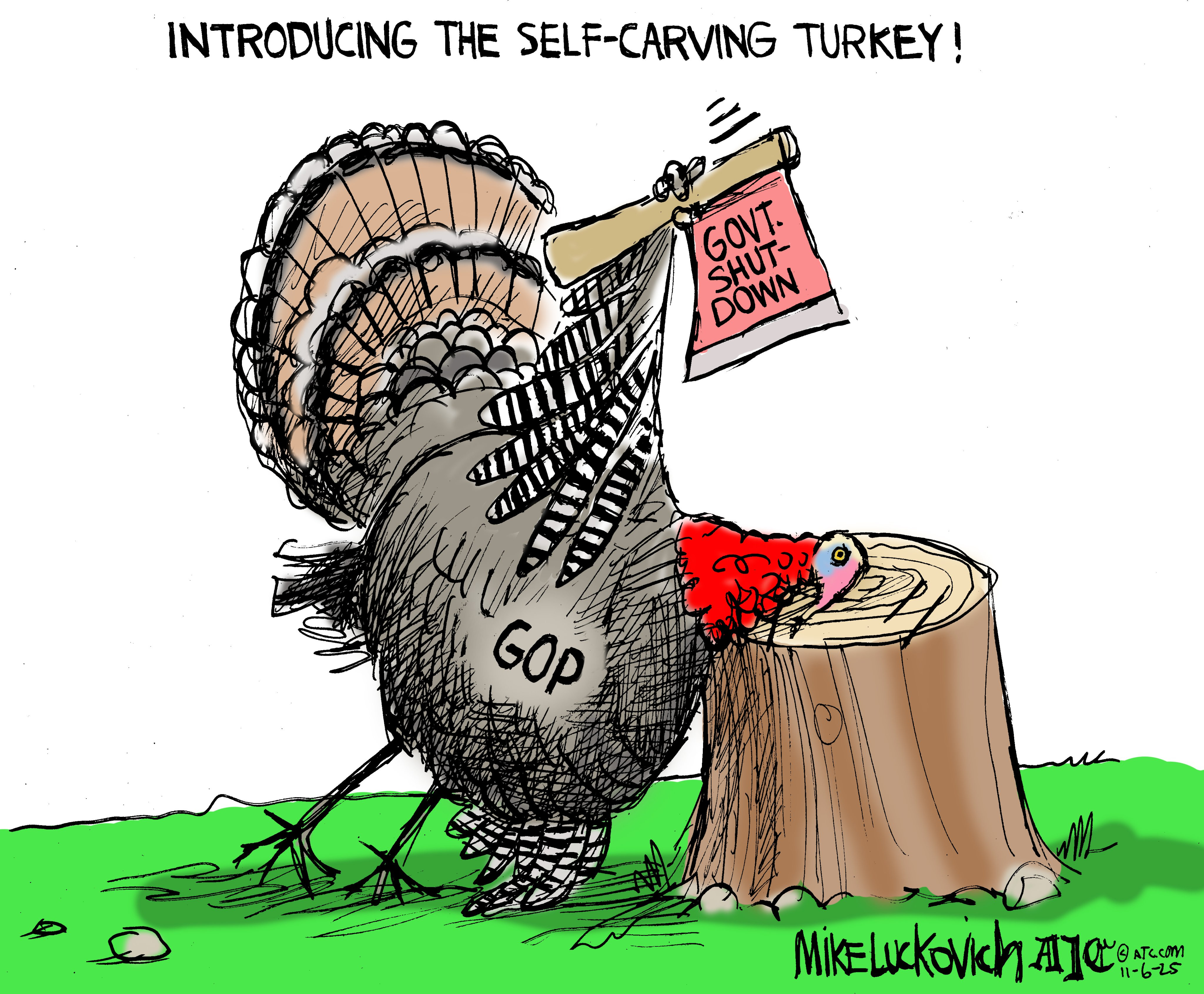
Mike Luckovich:
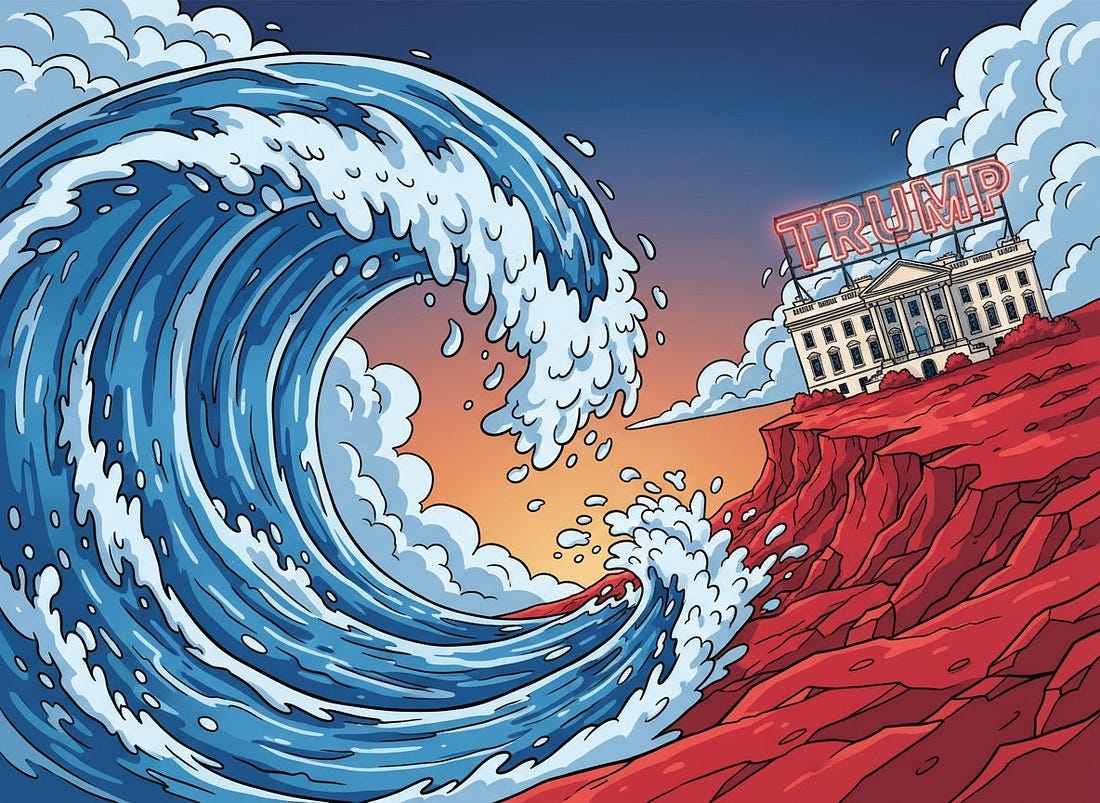

Jesse Duquette:

Drew Sheneman:

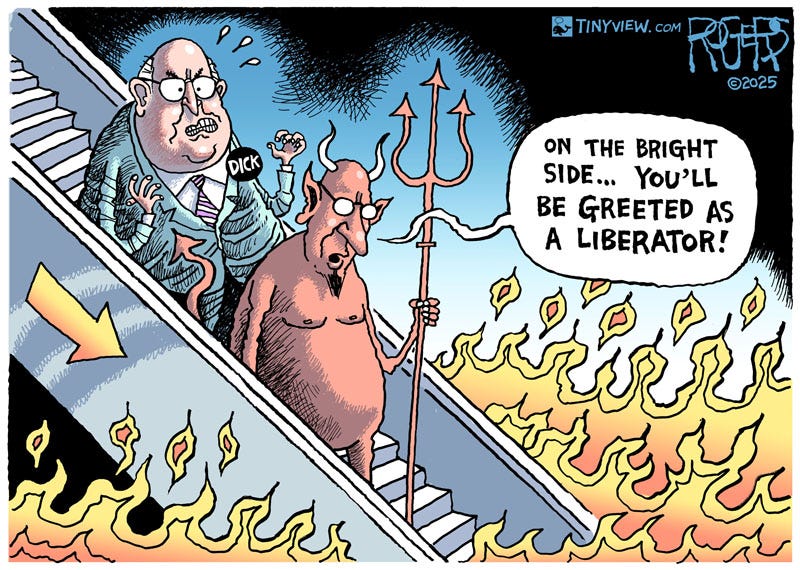
Rob Rogers:
This could be my self-portrait:

Photo Finish
Tappan Zee Bridge, from Sleepy Hollow, N.Y.

Thanks for the interesting piece on Helen Gahagan Douglas, whose (first and maiden) name I only knew because Tom Lehrer rhymed it with "Ronald Reagan" once - nice to get some of the historical background. I'll look for your book!
Excellent book. The Republican Party has not changed. It’s only gotten much worse