

Still free to subscribe to this nearly daily newsletter! Greg Mitchell is author of fourteen books and director of five films for PBS since 2022. His latest film “Woody Guthrie and The Ghost of Tom Joad Today” is now streaming via PBS.
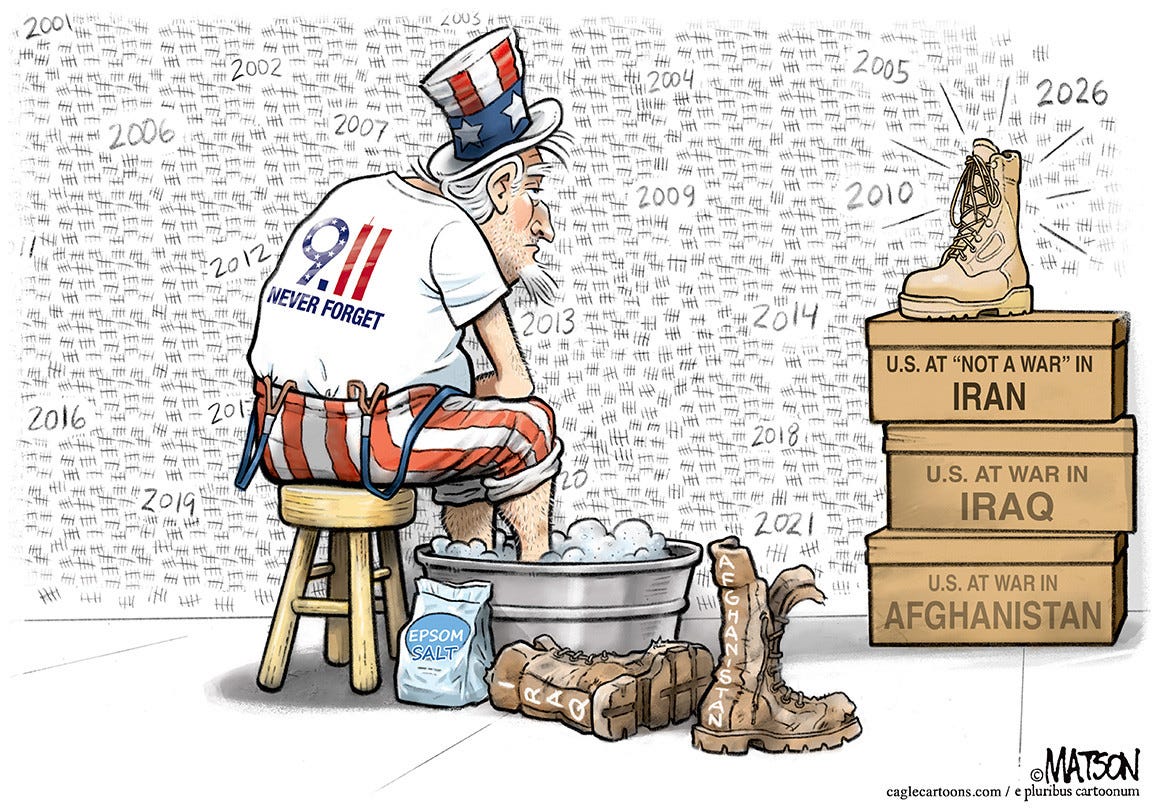
Matson:
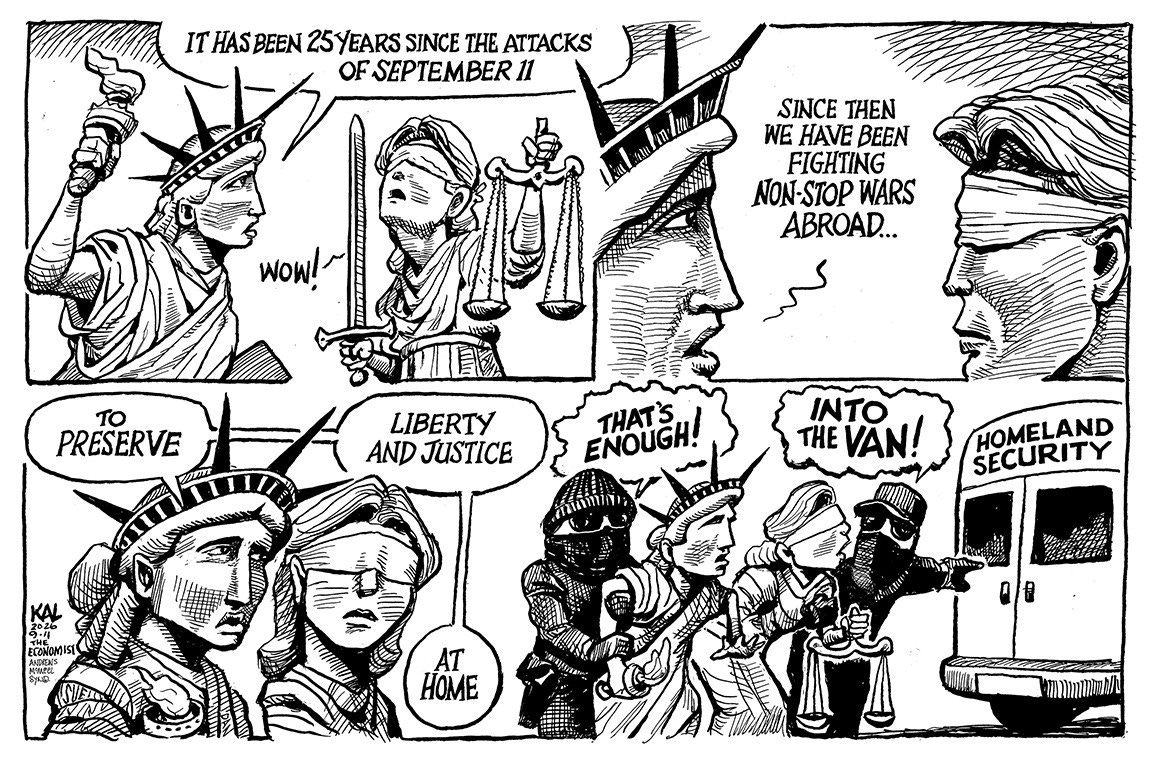
KAL
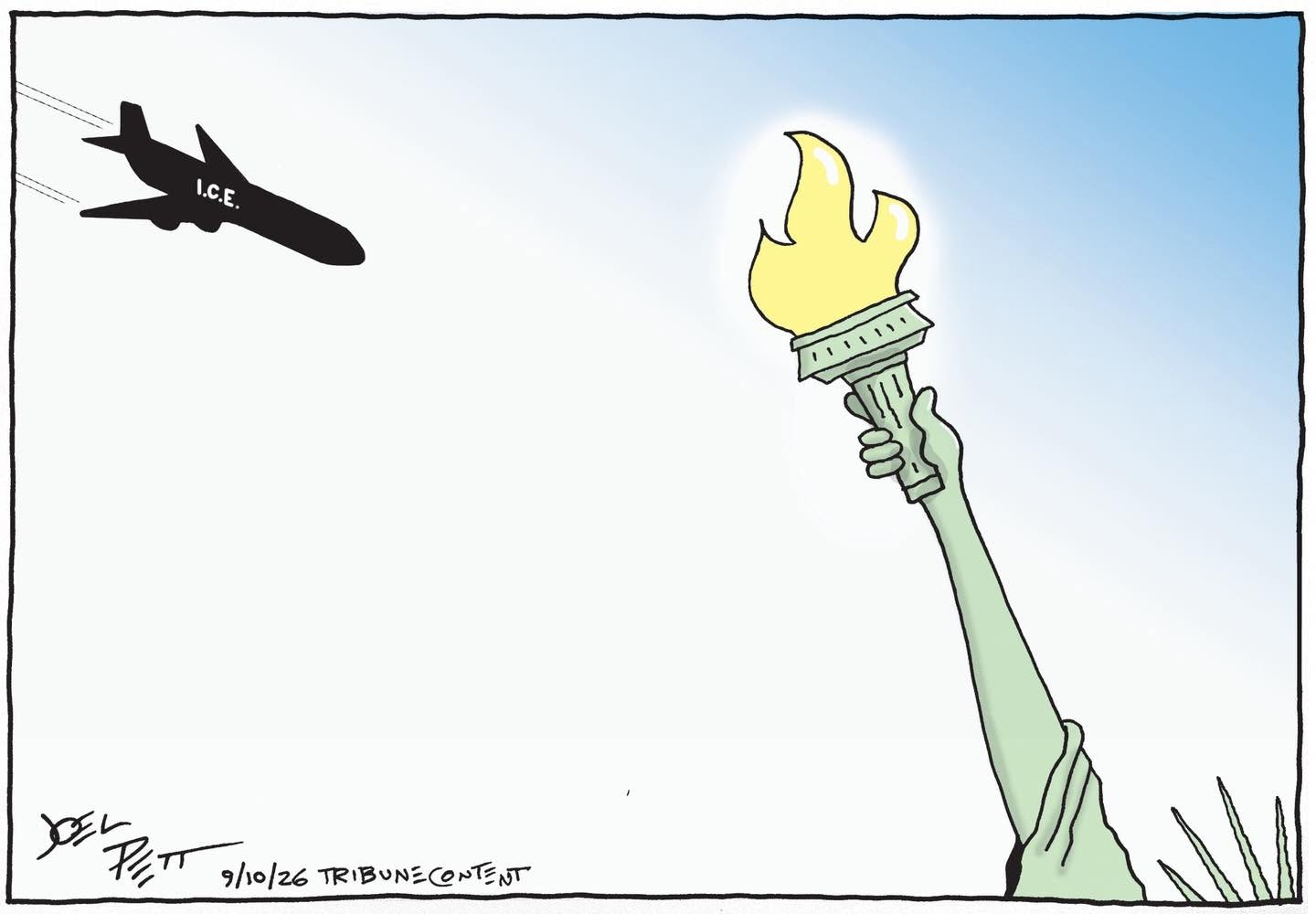
Pett:
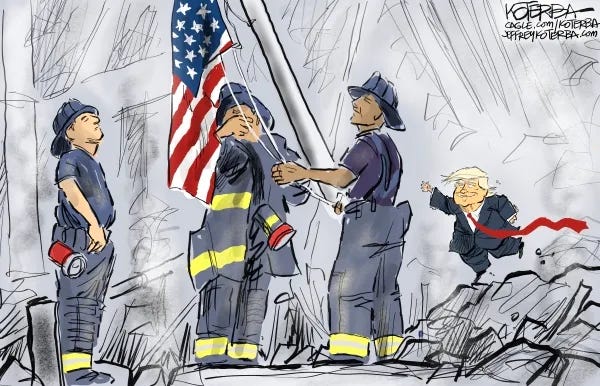
Koterba:
Anthropic Says It Blocked Possible Efforts to Build Biological Weapons
In a new report, the A.I. start-up added that it could not determine if the research was legitimate or nefarious, leading the company to shut down the work.
At least there’s this, a belated change of heart by a major Trump booster. AARON RODGERS: “There’s no Make America Great Again movement, because the guy you elected hasn’t done any of his campaign promises.”
As you may have read, Jimmy Kimmel had to scrap his interview with Texas candidate James Talarico because of fears of an FCC assault on him, ABC, and local affiliates—so he went ahead with it but had to put it up on You Tube. Here it is:
The contiguous U.S. just experienced both its hottest summer and hottest August on record, based on new NOAA data. And Europe's Copernicus service says August was the hottest month on record for Earth as a whole amid human-caused climate change.
Foreign Policy:
While many Americans believe that Israel has committed a genocide against Palestinians in Gaza over the past three years, attempts to understand what really happened there and hold Israel accountable have fallen short so far. The legal case at the International Court of Justice has been stalled by American and European opposition. The ferocious debate over the term itself has degenerated into partisan flamethrowing and definitional nitpicking. The campus protests that erupted in the spring of 2024 were violently repressed and have largely gone away.
A new book by the British Israeli architect and political activist Eyal Weizman tries to fill that void by telling the story of Israel’s systematic destruction of Gaza street by street, farm by farm, and hospital by hospital. What sets Ungrounding: The Architecture of Genocide apart from this polarized discourse is its determined focus on the physical and its analytical tone. The evidence, collected by Weizman and his team from audios, videos, and interviews and subjected to rigorous analysis, is overwhelming.
Film Pick
And adding a great deal to the above.
Variety:
“Gaza Doc ‘NAZA,’ From ‘No Other Land’ Directors, Earns Record-Breaking 24.5-Minute Venice Ovation
“NAZA” shows “in detail the systems behind Israel’s calculated mass killing of Palestinian civilians in Gaza,” according to its official synopsis. The hot-button doc, which was shot in secrecy at night on the rooftops of Tel Aviv, features revelatory interviews with 24 Israeli military intelligence officers and soldiers. “NAZA,” a term that appears throughout the documentary, is an acronym for collateral damage used by Israeli intelligence to indicate the number of civilians it expects will be killed in an airstrike.
Their film “No Other Land” was one of my three favorite films a couple of years ago. (And let’s not forget last year’s “Voice of Hind Rajab.” I haven’t.) Here is must-read article written by the co-directors. And from their Venice presser:
Music Pick
Beck has a new album coming next week and here’s a cut just out, sounding like the Byrds from around “Notorious Byrd Brothers.”
Nashville International Airport’s board is expected to vote in favor of renaming the field Dolly Parton International Airport. Go deeper.
From Tune to Toons
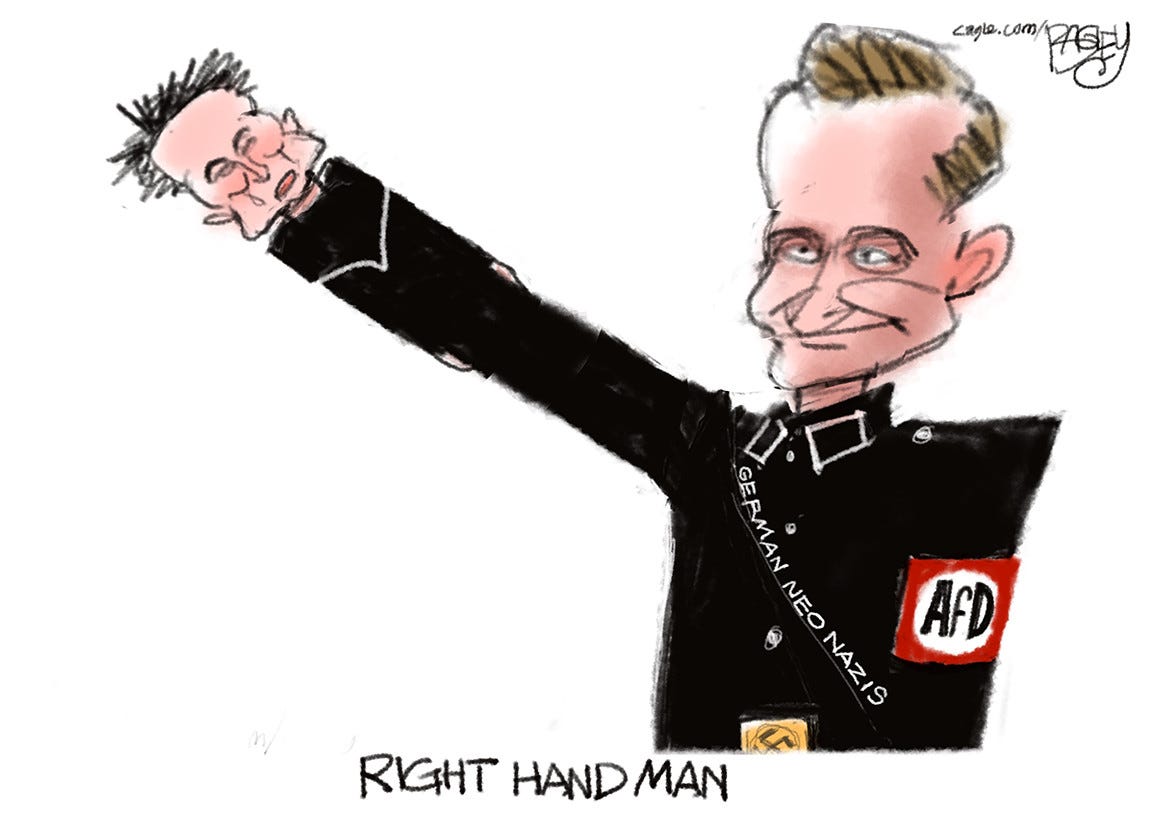
Bagley:

Bramhall:

Blitt on Canada’s response on tariffs:
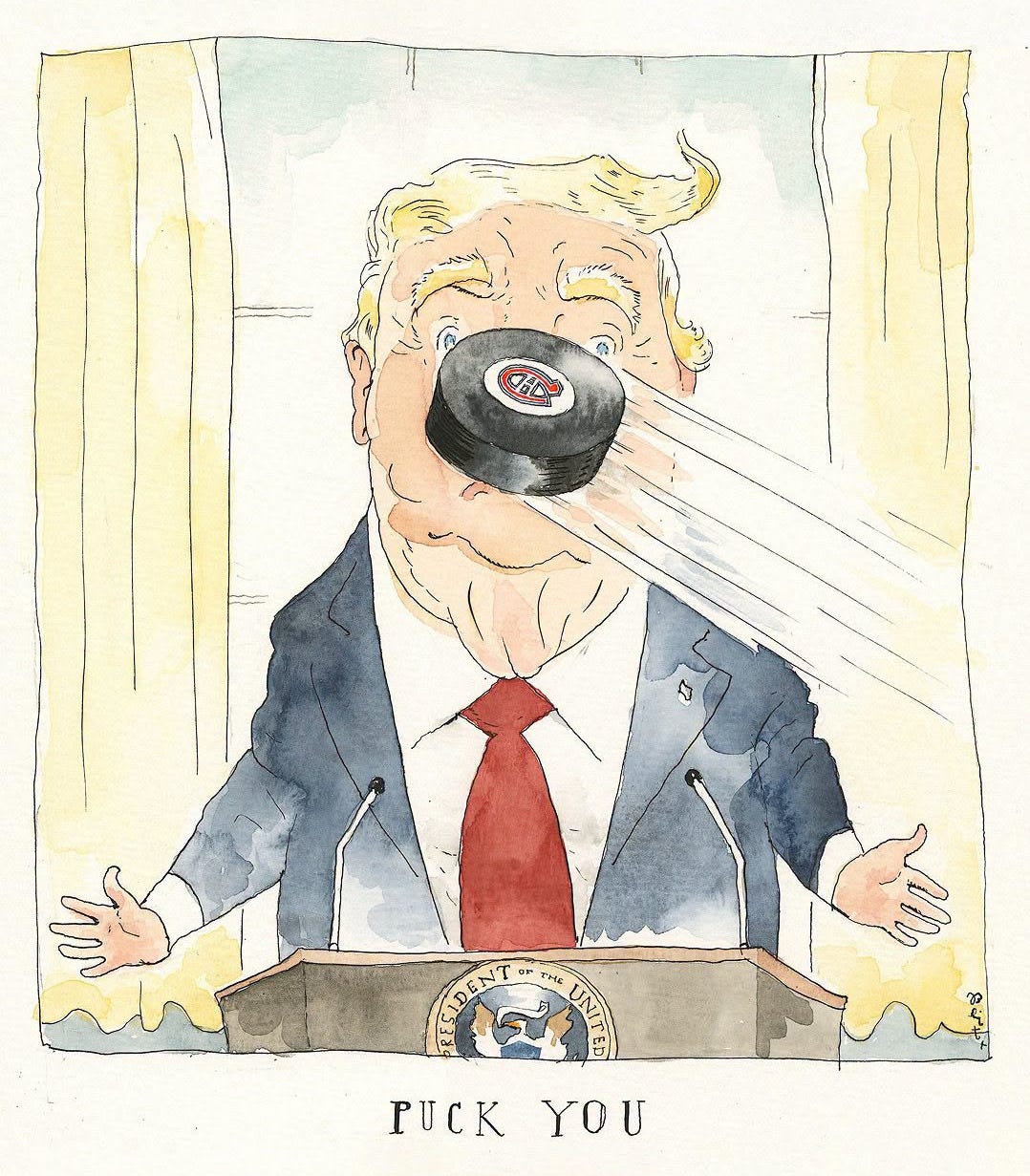
Photo Finish
When I visited Ground Zero a year later:
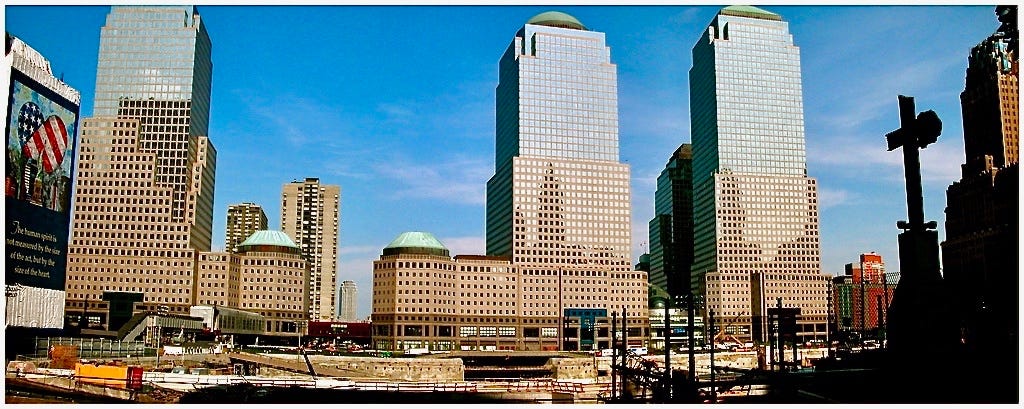
Twenty-five years ago today, at 8:20 in the morning, I boarded a Metro North train to New York, heading for my office in the East Village, where I served as the editor of venerable Editor & Publisher magazine. A few minutes later as my train sped south, an airliner flew almost directly overhead above the Hudson on its way to find and smash into one of the World Trade Center towers. Before our train reached Upper Manhattan, a conductor announced that a plane had hit the WTC. Surely this was a small plane, and an accident. I looked down the river and saw the smoke against a perfectly blue sky, recalling that one of my friends--we had chatted just the night before about our Little League team--worked in one of the towers.
Arriving at Grand Central, I headed for the TV sets (always turned to Fox News) mounted at the main newsstand off the concourse. There I learned that a second plane, an airliner like the first, had struck the other tower. So, not an accident. The subways were still running, but I could not move from in front of the TV.
It was in that news kiosk where I wordlessly watched the towers fall. Around me: a few screams, many tears, but mainly fear. My main thought was: “What floor does Jon Albert work on?”
After watching the next hour unfold on the screen, in horror, I tried to catch the last train out of Dodge, barely missed it, then joined the mass evacuation from the terminal after a voice on the P.A. announced a plane might be heading our way. I spent the next three hours in a sun-drenched daze, trying to reach the E & P office, more than thirty blocks south. I took a cab for a few blocks, then all traffic stopped. I walked back to Grand Central thinking the subways or trains might be running again. They weren’t. Found a pay phone to call home. Like other New Yorkers, I staggered around midtown for an hour, catching bits of news off TVs in bars and cafes. A persistent rumor: Another hijacked airliner might be heading our way.
Then I trudged straight downtown, toward the office, with smoke filling the sky beyond that and sirens crying everywhere. Rooms in every hotel were already taken. At one near Gramercy Park, three young people who had been catering an event in one of the towers tried unsuccessfully to book a room. They were ghost-like, partly covered in ash.
As I got below 14th Street, I could see more clearly the mountain of deadly smoke covering that patch of blue sky to the south that once embraced the towers. I was a veteran of ground zeroes, having spent time in Hiroshima and Nagasaki, but this was here, this was now. Swirls of acrid, probably toxic, dust blew in my face—pulverized metal and (I imagined) human residue.
Well, I reached the office, and somehow, with the reliable Joe Strupp, getting some stories up on our website. When the trains started running again in the evening, I headed for home. There I learned that Jon Albert, who worked at Marsh-McLennan, nearly 100 floors up, had not yet returned, and everyone feared the worst. Also missing, and likely victim of the same fate, was the daughter of our neighbors directly across the street.
None of us from E & P could reach our office the next day, as everything south of 14th Street was sealed off, but many of us dodged the police lines 24 hours later to help get the next issue out, on time: a small miracle. To do it, we had to ignore the disturbing smells from outside that often filtered through our ventilation system. Our cover was all black with “September 11, 2001” in white type. My friend Jon Albert, and about 3000 others, still hadn’t come home.
Thank you for the wonderfully moving remembrance, Greg. It couldn't have been easy and that sad memory must come around every year. I'm sorry.
A very powerful posting, with many poignant cartoons, ending with your personal experiences on that day, and those to follow as you learned the fates of people you knew who did not survive. The Beck video added to the solemnity. The GAZA film stands apart on its own as a record of atrocities. Also, thanks for the link the the Jimmy Kimmel interview of James Talarico. [edit]