

Yes, it’s still free to subscribe to this nearly daily newsletter! Greg Mitchell is the author of fourteen books and director of five films for PBS since 2022. In a previous life, he was a longtime editor at the legendary Crawdaddy.
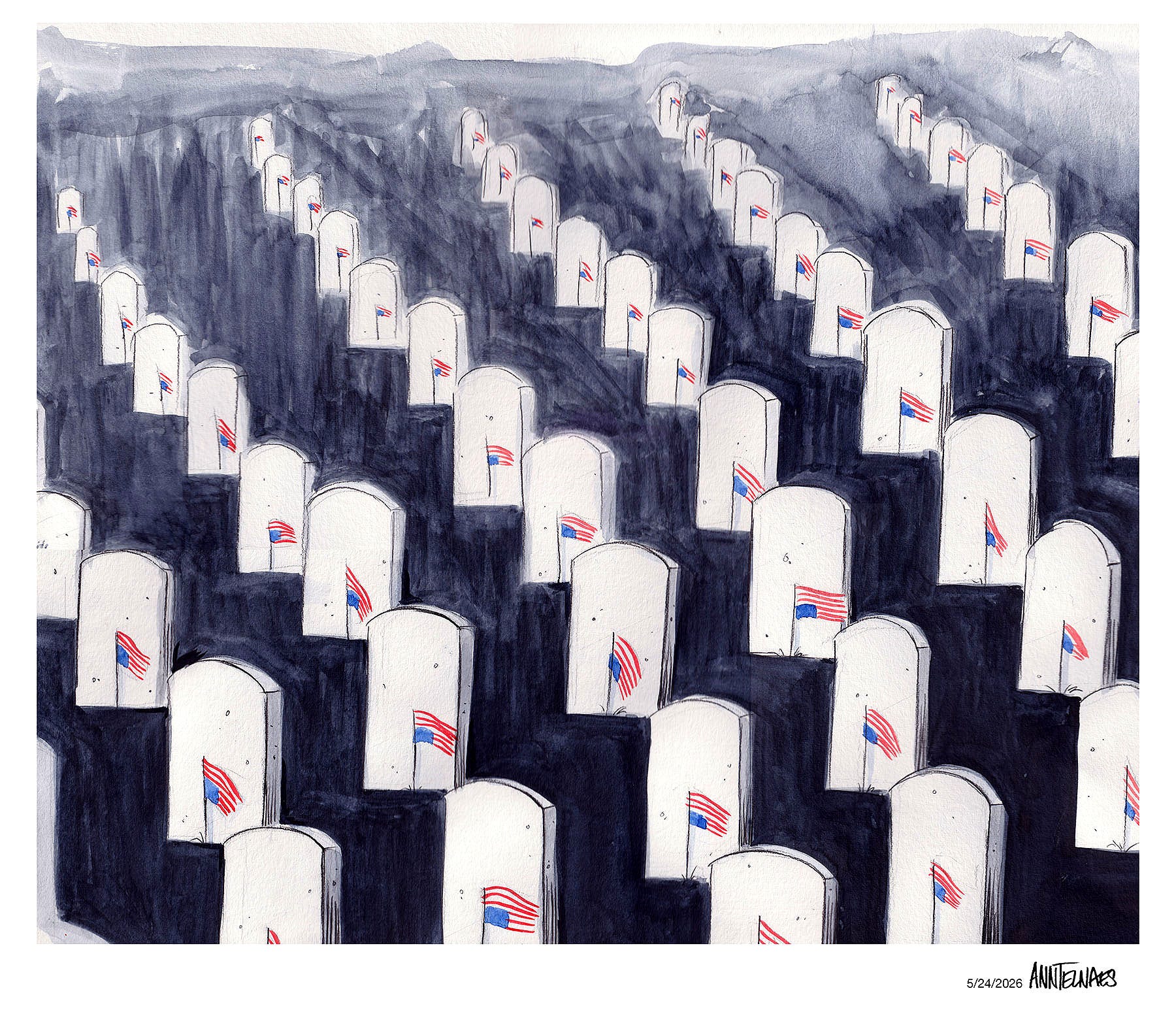
Ann Telnaes:
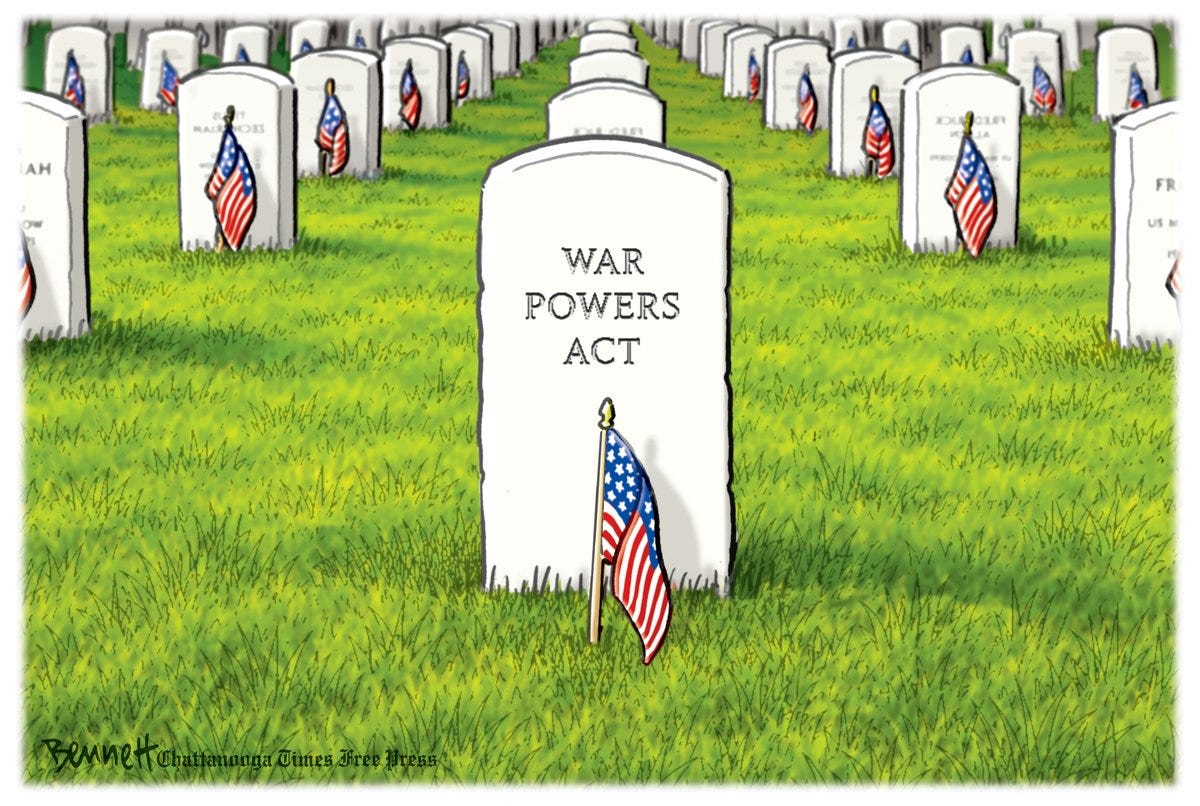
Clay Bennett:
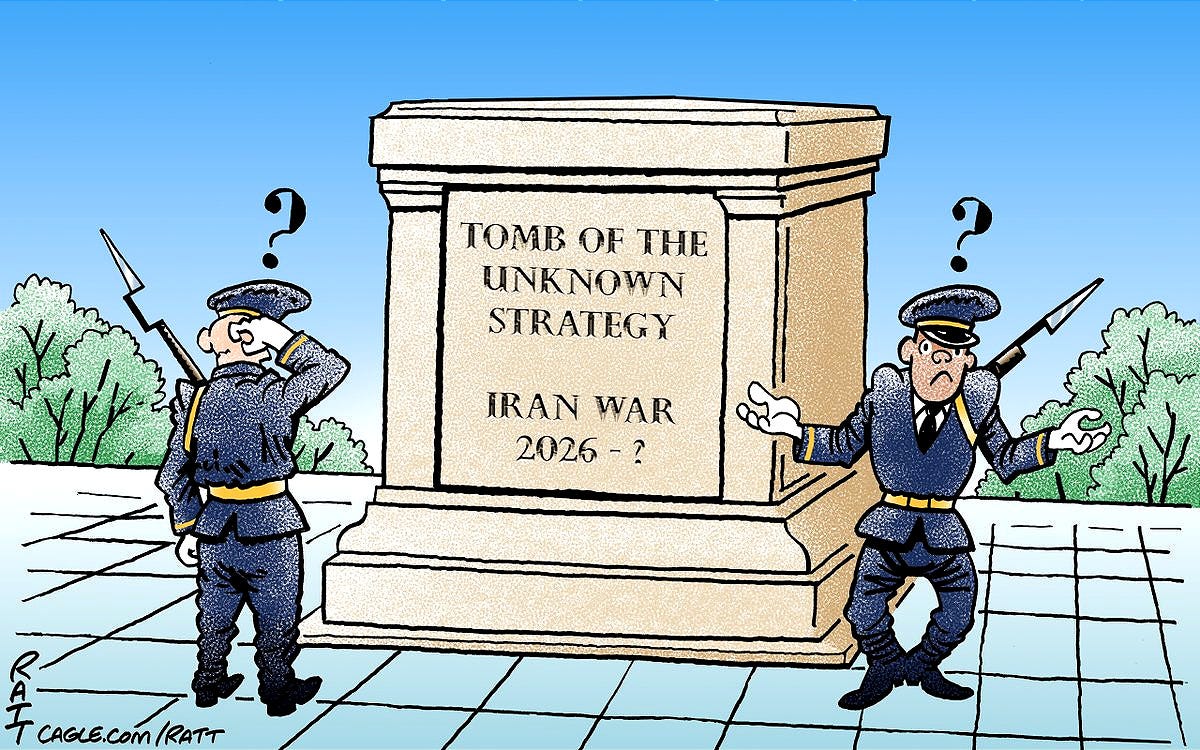
Ratt:
The Memorial Day Massacre
A special holiday look back at my PBS film and book on the tragic incident in Chicago in 1937.

As the Great Depression continued in May of 1937, steel workers at massive plants in the Midwest and Pennsylvania sought recognition for their new union and basic concessions such as the eight-hour day. After police in Chicago clubbed picketers near Republic Steel, union organizers called for a holiday picnic to build support on the wide prairie not far from the plant. The festive occasion drew a crowd of over 1500, including many women and children dressed in their Sunday best. The organizers then called for a ragged protest march to the plant.
A contingent of a couple of hundred police, who had been allowed to prepare at Republic Steel—and armed with club and tear gas by the company—halted them halfway there. Soon, forty marchers would be shot, most of them in the back or side, and ten would be dead or dying. Another fifty, clubbed by the cops, suffered head wounds.
It was all captured on film by a Paramount News cameraman, whose shocking footage would then be suppressed—until leaked to a famed reporter and then a crusading U.S. Senator screened it at a sensational D.C. hearing. Still, no cop was ever punished in any way.
My recent film Memorial Day Massacre: Workers Die, Film Buried aired across the country via PBS and you can still watch the trailer and read background and reviews via the film’s main site. It’s produced by Lyn Goldfarb and narrated by Josh Charles, with Studs Terkel.
>Watch trailer:
There’s also a companion book with the same title, the first oral history of the tragedy. The book, in both paperback and as an e-book, features eyewitness accounts by numerous activists and the wounded, and compelling and unique reflections by the likes of Gore Vidal, Studs Terkel, Howard Zinn, Howard Fast, and Dorothy Day, even a cameo by Ayn Rand.
A sample or reviews gives you some idea of the story:
“So important. Another piece of forgotten history and lesson in the manipulation of truth.” –David Maraniss, author of bestsellers Path Lit by Lightning, biographies of Barack Obama and Bill Clinton, and other books.
“Stunning. Rivetingly tells the story of one of the greatest human rights atrocities in U.S. history, and the success of the forces of democracy to defeat the attempt of the powers that be to hide it from the public.” — Rick Perlstein, bestselling author of Nixonland, Reaganland and other books.
“Astonishing footage–fascinating film!” — Geoffrey C. Ward, Emmy-winning writer of Ken Burns films, including The Civil War, The U.S. and the Holocaust, Jazz, The Roosevelts and The Vietnam Ware
“A devastating documentary. This film is so good.” — Amy Goodman, Democracy Now!

Memorial Music
Now on to music. A few varied songs related in one form or another to Memorial Day:
A depiction of the sad treatment and fate that met even one of the most illustrious soldiers, Ira Hayes, the Native American who helped raise the flag in the famous photo on Iwo Jima. Johnny Cash was proud to do this Peter LaFarge classic and drew wide praise from Native Americans.
Emmylou Harris & Linda Ronstadt collaborated on the beautiful “1917,” by David Olney, as a woman takes pity on a soldier and sleeps with him.
Perhaps The Kinks’ greatest album from 1969, Arthur, explored World War II in three songs, including one that applies to all wars, “Some Mother’s Son.”
Jason Isbell, “Decoration Day”
Steve Earle explored “Rich Man’s War” at the height of our folly in Iraq.
Dire Straits reached a mass audience with the title track of their 1980s album “Brothers in Arms.”
Woody, “Sinking of the Reuben James”
No one in our era wrote more anti-war songs than Phil Ochs—even the little-remembered U.S. invasion of Santo Domingo earned a fine tune. But several tackled more universal antiwar themes, such as “One More Parade.”
Iris DeMent with a haunting take on the Vietnam “Wall in Washington.”
Thank you, Greg for your work
It is appreciated and keeps us on our toes
You are relentless and are a striking example to all of us
A column to remember, on this day and all days.