

Greg Mitchell has authored more than a dozen books (see most of them here), including bestsellers and award-winners, and directed four recent PBS films. He was the #2 editor at the legendary Crawdaddy from 1971-1979. Subscribing to this newsletter is still FREE—thanks!
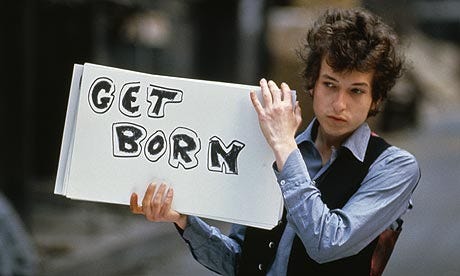
Last week marked the 60th anniversary of my first Dylan, or any, rock concert so I thought I should mark it here in a special posting before the month was out. I published it here about four years ago but 90% of you are new since then and, who knows, if you read it before you might enjoy it again.
Bob Comes to Buffalo: Too Much Cowbell!
My Dylan fanaticism began in 1963 when “Blowin’ in the Wind” by Peter, Paul and Mary, rocketed up the charts, introducing me to the obscure songwriter. They followed it with another Dylan tune, “Don’t Think Twice, It’s Alright,” and I started seeing him cited here and there–-while never hearing the man sing himself. Then Newsweek probed his name and background, revealing that he was really Robert Zimmerman and hailed from Hibbing, Minnesota, not from one of a number of Woody Guthrie-esque places he’d claimed. Dylan told the Newsweek reporter he was estranged from his parents when actually they were just across town that day waiting to see him perform at Carnegie Hall.
Since I hardly knew him as Bob Dylan it was hard for me to get too excited about his deceptions. Like most 15-year-olds, I occasionally dreamed of running away and taking on a new identity myself. Still, it came as quite a shock a year or so later when Dylan’s “Subterranean Homesick Blues” emerged. I didn’t understand much of it —“the heat put plants in the bed” went right over my head, and what the hell was “don’t follow leaders, watch the parking meters” implying? All I knew was, Dylan had “gone electric” with that song and the album, Bringing It All Back Home.
Then a new group, the Byrds, released “Mr. Tambourine Man,” covering the original acoustic number. This marked the birth of “folk-rock.” A month later, wham, “Like a Rolling Stone” blasted from radios everywhere. I literally wore out my copy, shouting the lyrics right along with Bob, my mouth close to the speaker on my cheap record player so that no one else in the house could hear me when I screamed HOW DOES IT FEEL?
It’s hard to do justice today to what it was like to hear this over a car radio or a transistor. The length alone—six minutes, twice the norm-–made it revolutionary for AM. The song was not overtly political, so whatever it stirred in me had to be more primal: maybe “you shouldn’t let other people get your kicks for you”? And the flip side of the single was even darker with “no trials” and “no truths” outside the Gates of Eden. By then, the booing that greeted him at Newport (see below) when he appeared with the Butterfield Blues Band had made the news, along with other incidents and articles claiming Dylan had “sold out.”
And this was true as well: I was “turning political” partly thanks to Dylan himself, through his old protest songs, which I refused to abandon. I certainly didn’t have any family members, relatives or close friends pushing me in that direction. (My parents were just counting the days until Nixon could run for president again.) Now I was buying singles like Barry McGuire’s “Eve of Destruction”--blatant antiwar agit-prop--and reading Black Like Me and The Autobiography of Malcolm X. Then Dylan’s album Highway 61 Revisited topped everything by anyone that came before. (Still does.)
In October ’65, starting my senior year in high school, I took a bold step: ordering a pair of tickets for a Dylan show on November 20 at classy Kleinhan’s Music Hall in Buffalo. I still don’t know how I managed to get tickets from my local music shop. In any case, this would be my first rock concert ever.
That wasn’t anything to be ashamed of back then. Only a few kids I knew had ever been to a show, usually girls who drove up to Toronto for the Beach Boys. Few bands came to Buffalo, only 20 miles away but another world, with a thick knot of highways to navigate and a huge downtown. And until senior year, I didn’t have a license that would allow me to drive after dark. Now I was all set, if I dared make the trek to Buffalo.
I didn’t know what to expect. This was long before the “rock press” appeared; wire service tour reports were virtually unheard of, and the internet, of course, was nothing more than science fiction. All I’d heard was that the Dylan show opened acoustic and then went electric—and was causing disturbances everywhere. No idea who played in the backing band.
A Buffalo paper ran a brief story, concluding: “He has performed at the Lincoln Center and Town Hall, and has made a series of personal appearances in England. Dylan’s music has dropped most of its original overtones of the wandering troubadour. His beat is sharper and heavier and the words are more complex.” This was the state of “rock journalism” back then. (Crawdaddy wouldn’t be born until the following year.)
At the hall I joined the freakiest crowd I’d ever encountered. Numerous kids likely from left-wing University of Buffalo had long bushy hair—“Jewfros,” before the word was coined -- like Dylan. Girls had long, straight hair. Some wore political buttons. A few protestors shouted anti-Dylan slogans outside.
After we took our seats in the balcony on the left, Dylan came out alone, with just a stool next to him. On it: a change of harmonica, a glass of water and some pills that he’d swallow from time to time. He’d already been associated with “drugs,” whatever that meant, and I wondered if he was getting high in public for “kicks” or just fighting a cold. The acoustic set was powerful, although I can’t say for sure which songs he played, except that it was weighted toward the newer ones, probably “Baby Blue” and “Tambourine Man.” No controversy so far.
Following intermission, a band came out with Bob—actually, The Band, then known as The Hawks, minus Levon for a spell—and immediately started playing loud, “Tombstone Blues.” I can’t recall the full set list but I do know what happened between songs: heckling, pointed cries of “We want Dylan” (the folk version, that is) and “Put down the guitar!” One protestor, apparently an early proponent of “more cow bell,” kept ringing one on the other side of the balcony. Many cried out, “Dylan is a sell out!” He plunged ahead. I recall “Ballad of a Thin Man” (below) as particularly great.
And so it went. Since I’d never been to a rock show before, I had no idea what other bands sounded like, if the amplification was always this crappy, if performers rarely or always spoke to the audience, and how much of an encore, if any, one could expect. But I had to start somewhere, and this was it. Now I’d been to the finest school, all right.
Several months later, Dylan released Blonde on Blonde (with “Visions of Johanna,” see below) and then stopped touring— after his infamous motorcycle accident, which gave him an an excuse to give up the rigors, and drugs, of the road. When he returned, as Country Bob, protests were nil: No more ring-them-cowbells for him ever again. As for me, other concerts would soon follow (Simon & Garfunkel, Jefferson Airplane, Blind Faith, Steppenwolf,and at Kleinhan’s that old backing group The Band in the best concert of all), and within five years of that first concert I’d be writing for Rolling Stone and then heading to to New York City for my Zygote and Crawdaddy decade.
Photo Finish
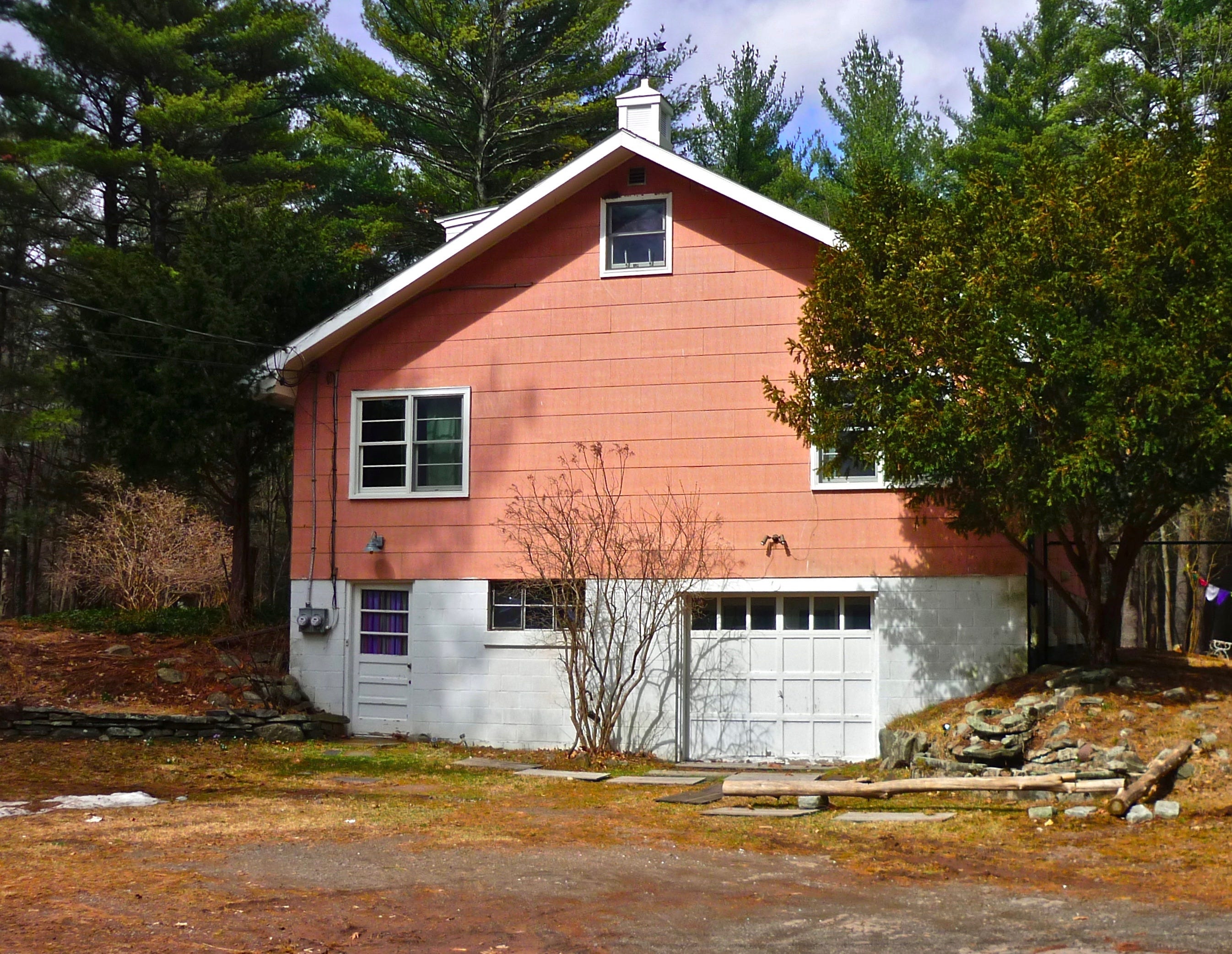
Continuing my daily feature, from my camera to you, let me know what you think, today: “Still Big, Still Pink.”
That jogged some nice memories. I saw Dylan on his first national tour, in ‘63, at the San Jose Civic Auditorium. Solo acoustic. It was amazing. Then, in ‘65, on the same tour you are referencing, at the Berkeley Community Theatre. No boos or heckling there. More like just a crowd dumbstruck by the revelation.
I had the pleasure of seeing Dylan at Massey Hall in Toronto. I believe it was November ‘65 and I went with a group of my high school classmates.
Massey Hall was an old venue then (has since been totally renovated) but it had )still had) some of the best acoustics anywhere, virtually on par with the Ryman Auditorium in Nashville. (I’ve been there too.)
Dylan’s first set was straight- ahead, acoustic folk music: one singer, one guitar and a harmonica. The sound was amazing!
When the curtain opened for his second set, Dylan was sporting an electric guitar and was surrounded by The Hawks (later known as The Band). The very first chord of “Like A Rolling Stone” literally shook Massey Hall to its foundations. It was loud and glorious, and the night just got better from there!